Anxiety rarely arrives as a single crisis. It accumulates — through marks, comparison, screens, short nights and the quiet weather of a home. Here is what is actually reaching your child, and what genuinely helps.
The anxiety that never announces itself
Nobody decides to be anxious
Nobody wakes up one morning and decides to be anxious—least of all a child. Anxiety in children seldom arrives as a single event with a nameable cause. Instead, it seeps in through the accumulated weight of expectation, comparison, exhaustion, and a world that has grown harder to read. By the time an adult notices something is wrong, the child has usually been carrying it alone for months.
An honest map, not a checklist
This article is not a diagnostic tool, and it does not offer a cure. What it offers instead is a map. It sets out the reasons behind anxiety in children in India right now, from the large and obvious to the small and easily dismissed. Then it turns to what parents and teachers can actually do. Some of what follows will be familiar; some of it will not, and in my experience those are usually the parts that matter most.
The weight of academic pressure
Where marks stopped being marks
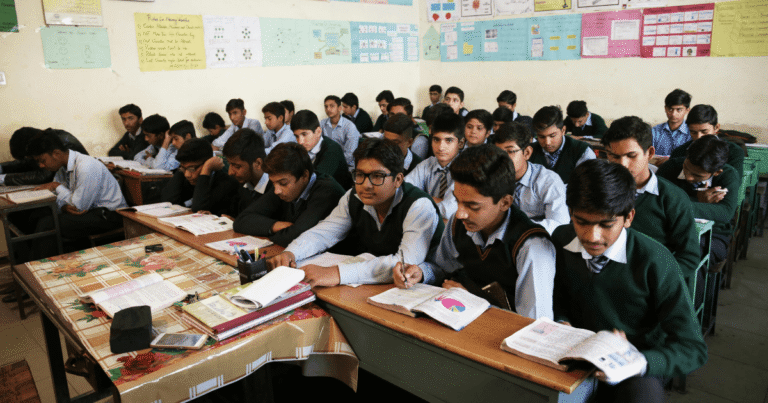
Begin here, because most children do. In India, education and personal worth have been knotted together so tightly, for so long, that many families no longer notice the knot at all. A child’s marks are rarely read as a measure of what was learned in one subject over one term. They are read as a verdict on intelligence, character and future prospects. Once a number carries that much freight, every test quietly becomes a referendum on the child.
The scale, in numbers
The scale of anxiety in children here is not anecdotal. A 2024 survey covered 861 students in Grades 9 to 12 across six schools in Manipur. It reported that every single participant recorded moderate to high academic stress. A majority also showed mild to severe depressive symptoms, and academic stress significantly predicted them. Beyond India, a systematic review pooled fifty-two studies from Asia, Europe and North America. Forty-eight of them reported a positive association between academic pressure and at least one mental health outcome. Those outcomes included depression, anxiety, self-harm and suicidal thinking. Anxiety in children also intensifies in the final years of schooling, with roughly one in six students carrying excessive strain.
A composite worth sitting with
Consider a boy — call him Ravi. He is a composite, assembled from a pattern that any counsellor or class teacher will recognise, rather than one real student. He is sixteen, lives in Bengaluru, and his day starts at six in the morning. School, then three hours of coaching, then home, food, and study again until midnight. He has kept this up for two years. He never complains. He is quiet, polite and steadily losing weight. His parents describe him as focused; his body is saying something else entirely, in the only language available to it.
The pressure a child mistakes for a personal flaw
Here is where the most serious damage happens. Children rarely experience this pressure as something being done to them. They absorb it, and then they own it. So when the load finally becomes unbearable, the conclusion a child reaches is not that it is too heavy, but that they are not enough. Anxiety in children lives precisely in that gap between what is expected and what a child believes about themselves. Widen the gap and the anxiety grows. Narrow it, and a surprising amount eases before anything else has changed.
The comparison trap — in the classroom and beyond it
The rank list teaches a lesson nobody intended
Peer comparison has always been part of school life. What has changed is its reach and its relentlessness. Reading marks aloud, publishing rank lists, garlanding the toppers while the rest of the class watches — these rituals are meant to motivate, and for a few children they do. For the rest they teach something far more durable: that worth is relative, and that being good counts for nothing unless it is also better—a child who learns that at eleven does not unlearn it easily.
Two forces that feed each other
Indian research has repeatedly identified the two strongest drivers, and they are as domestic as they are institutional. In one study of high school students in Kolkata, nearly two-thirds reported academic stress and about two-thirds reported pressure from parents for better performance. More than eighty per cent reported examination-related anxiety. Parental pressure and peer comparison do not operate in separate compartments when it comes to anxiety in children. A child measured against the neighbour’s son at home, and against the rank list at school, is being measured continuously and from two directions. No interval remains in which they are simply themselves.
Comparison now follows the child home
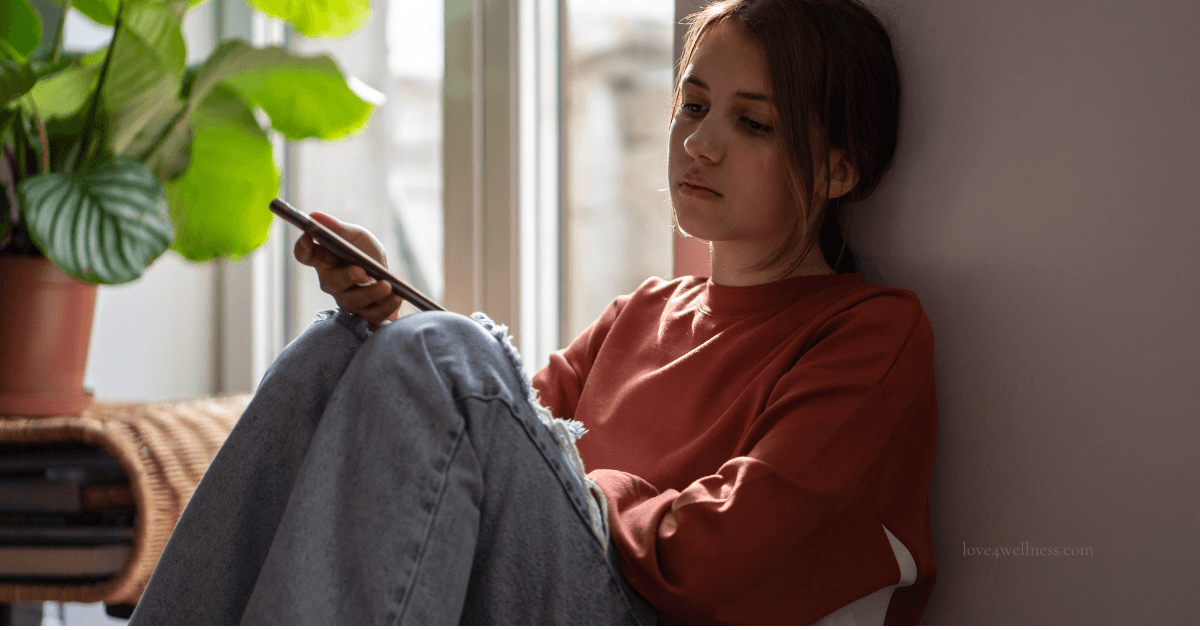
Social media has stretched that measurement across every waking hour. In one survey of Indian adolescents, a high proportion reported feeling pressure to maintain an image online. Close to three in ten strongly agreed that they felt bound by digitally transmitted standards of attractiveness, success and popularity. The classroom at least closes at four o’clock. The feed never closes. Worse, the people it invites comparison with have edited themselves into versions that do not exist offline.
Where the burden falls heaviest
That burden is not evenly distributed. One large UK study measured screen use through time-use diaries rather than asking teenagers to recall it. Among thirteen- to fifteen-year-olds, it found that greater time on social media was associated with self-harm, depressive symptoms and lower self-esteem, with the clearest associations in girls. I raise this not to alarm the parents of daughters, but because it tells us where watchfulness against anxiety in children is most usefully directed.
Three scrolls, at eleven at night
In an actual home this looks smaller than the research makes it sound. A thirteen-year-old — another composite, drawn from a pattern rather than one real child — stops volunteering how her day went, not because nothing happened, but because a class WhatsApp group had already ranked the mid-terms before she opened her school bag. Comparison was always the engine. The phone simply added fuel and removed the off switch. The same groups carry forged circulars and rumoured leaks, and the habits that help a child check them are set out in how to teach children to spot fake news.
Thrive Tip
For one week, ask nothing about marks, ranks or what anyone else scored. Ask instead: what was the most interesting thing that happened today?
Notice how many days pass before your child believes the question is genuine. That interval is worth knowing about.
What the body contributes: food and movement
The gut has more to do with mood than most parents expect
Here is the factor almost nobody thinks to check. The gut and the brain communicate constantly, in both directions. Researchers now treat the population of microbes living in a child’s digestive tract as an essential piece of the diet and mood puzzle rather than a curiosity at its edge. Much of the body’s serotonin is produced in the gut, and gut bacteria help regulate the raw materials for it. A diet dominated by ultra-processed food and refined sugar disturbs that ecology — and with it, one of the systems that keeps anxiety in children in check.
The lunchbox is a nervous-system decision
A child who skips breakfast and runs the school day on biscuits, packaged juice and instant noodles is therefore not merely eating badly. Without the faintest idea that they are doing it, they are making their own nervous system more reactive. Moods grow steeper, and calm concentration harder to reach. I have written separately about how food shapes thinking; the point worth carrying into this article is narrower. Diet is not a lifestyle question sitting politely beside mental health. On the evidence, it is part of the picture for anxiety in children.
Movement is the release valve schools are sealing shut
The body stores stress, and movement is how it gets discharged. When a child runs, plays or moves with any sustained effort, the brain releases the chemistry that regulates mood. Yet across India the pattern runs backwards. Games periods shrink as examinations approach, breaks get shortened, and the hours after school fill with tuition. So the children who most need to move — the overloaded, the anxious, the chronically short of sleep — are the ones whose movement disappears first. All of it goes in the name of creating more time to learn.
Cautious evidence, useful anyway
A 2025 review in BMC Public Health pooled thirty controlled studies and found that physical activity interventions improved children’s mental health overall, with the strongest effects on stress reduction — one of the more direct levers available against anxiety in children. Its authors are candid that the quality of the underlying evidence is low, and I will not overstate what it proves. This is a well-supported direction of travel, not a precise prescription. Even read at its most cautious, though, the finding says something a timetable committee ought to hear. Cutting games to add revision is not the neutral trade it appears to be.
Screens, sleep and the always-on evening
An evening their parents never had
Today’s school-going children inhabit an evening with no natural end. Conversation, entertainment, homework, gossip and the low hum of everyone else’s life all arrive through the same rectangle. None of it switches itself off. Meanwhile the passive consumption of other people’s curated achievements produces a constant, low-grade sense of falling short. It is never sharp enough to name, yet steady enough to wear a child down over months.
A more specific target than ‘screens are bad’
Accuracy matters here, because the public conversation tends toward panic. Not every screen behaves the same way. One careful study of young people found that screen use in the two hours before bed had little association with sleep, while screen use once in bed did — particularly when it was interactive. The researchers concluded that blanket bans across the whole evening are neither achievable nor well founded. For a parent managing anxiety in children, that is far more useful than a general alarm. It points at a specific, changeable behaviour — the phone in the bed, rather than the phone in the house.
The melatonin a phone quietly switches off
The mechanism is worth understanding, since it explains why willpower alone rarely fixes it. Screens emit short-wavelength light which suppresses melatonin, the hormone that produces drowsiness, and shifts the body clock later. Stimulating content compounds the effect by raising alertness at exactly the hour it should be falling. A teenager who genuinely intends to sleep at half past ten can therefore find themselves wide awake at one, and conclude that something is wrong with them.
A tired brain is a fragile brain
Whatever the cause, the consequence is the same. Sleep is when the prefrontal cortex — the region governing reasoning, impulse control and emotional regulation — restores itself. A child running on short nights is attempting the hardest emotional work of their life on the least capable version of their own brain. Anxiety in children who are poorly slept is close to physiologically predictable — not a mystery, and certainly not weakness.
The home environment — what children absorb without words
Children read the weather of a house
Children are extraordinarily accurate barometers. They register what is unspoken, they mirror what they observe, and they conclude from tone long before they understand content. A household does not need to discuss its worries aloud for a child to know they are there.
Anxiety travels from parent to child
The research on this is more direct than many parents expect. One four-wave longitudinal study followed more than six thousand students. It found that parental anxiety significantly predicted child anxiety at every time point. The effect was stronger for girls, and stronger for younger children than for adolescents. Notably, the influence also ran the other way in the later waves, as anxious children raised anxiety in their parents. This is a loop, not a one-way transfer.
How the transmission actually works
The mechanisms are unglamorous and, usefully, visible. A long-standing review identifies three: modelling, information transfer and the reinforcement of anxious or avoidant behaviour. In plain terms, a child watches how an adult reacts to uncertainty. They listen to what that adult says about how dangerous the world is, and they notice which fears get rewarded with rescue. None of this requires intention, which is also why it can be unlearned — modelling, information and reinforcement all run in reverse just as easily.
Why this is not an accusation
Let me be plain, because this section can land badly. Parental anxiety is real, reasonable and usually earned. A parent who grew up with financial insecurity carries that history in their body. A parent fielding pressure from their own extended family about a child’s results is managing two systems at once. So the claim here is not that parents cause anxiety in children. It is that the emotional climate of a home shapes a child’s inner world profoundly. Unlike almost every other factor in this article, moreover, that climate is within your reach this week.
What a child hears when the result is bad
Consider the moment a poor mark comes home. If it meets panic or visible disappointment, the child learns that a bad result is a catastrophe, and files the lesson away for every future examination. If it meets curiosity — what happened, what did you find hard, what shall we do differently — the child learns that setbacks are solvable problems. Neither reaction requires a speech. Both are absorbed in seconds, and both last for years. Board season packs all of this into a few weeks, which is why I have taken it stage by stage, from revision to results day, in the article on exam stress in teenagers.
Thrive Tip
Before you respond to your child’s next disappointing result, take one breath and ask yourself what your face is currently saying.
The child will read your face before they hear your sentence — and they will remember the face.
A definition of success that narrowed to two doors
Two professions, several generations
Step back, and a wider pattern comes into focus. For generations, an enormous share of Indian parental aspiration has been funnelled into two professions: engineering and medicine. The IIT dream, the NEET journey, the JEE preparation that now begins in Class 8 — these are cultural phenomena rather than educational choices. Behind them sit decades of post-independence belief that one particular kind of professional success equals safety. I have examined what that funnel actually looks like in numbers in the article on what coaching advertisements hide.
The world moved; the script did not
The difficulty is that the world has changed and the script has not. Routes to a good life have multiplied considerably. Yet children who might flourish as designers, researchers, athletes, teachers or entrepreneurs still receive a message, sometimes stated and more often implied: that such paths belong to people who could not manage the real ones. I have argued at length that the same intelligence that nearly cracks an entrance exam opens dozens of other strong doors. Here, though, the relevant consequence is emotional rather than practical.
Anxiety as a reasonable response
So consider what we are actually asking. A child is told, however gently, that exactly two futures count. Then they are shown odds that make both improbable. Anxiety in children, under those conditions, is not a malfunction. It is an accurate reading of the situation as it has been described to them. Change the description, and you remove a genuine cause rather than merely treating a symptom.
The small triggers that are never trivial
The things adults wave away
Then there are the smaller matters — the ones adults dismiss and children carry in silence. Being picked last for a team. Mispronouncing a word and hearing the laughter. Sending a message to a group and receiving nothing back. Discovering that friends made plans without you. Forgetting homework. Being called on when you do not know the answer. Wearing the wrong shoes on a day when everyone notices.
Why small does not mean minor
From the outside, these look like nothing. From the inside, they can be devastating. A child’s social world is their entire world, their sense of belonging is still under construction, and their brain is still learning to regulate emotion. Anxiety in children does not require a large trigger. Frequently it requires only an accumulation of small ones, landing on a mind that cannot yet process them all.
The symptoms that arrive instead of the words
These are the moments that pile up and then surface elsewhere. They surface as the stomach ache before school, the tears that seem to come from nowhere, the child who is suddenly and inexplicably not themselves. Adults tend to go looking for one large cause, find none, and conclude there is no problem. Yet the cause is usually there. It is simply distributed across forty small things rather than concentrated in one.
How anxiety in children shows up — what to watch for
In younger children, it speaks through the body
Anxiety in children rarely announces itself by name. In younger children, it tends to present physically. Watch for recurring stomach aches and headaches, especially on school mornings; difficulty falling asleep; clinginess; tears over small things; a sudden retreat from activities they used to enjoy. A child who develops a reliable Monday-morning stomach ache and no other symptom is not inventing it. They are telling you something true.
In teenagers, it often looks like indifference
Older children disguise it differently. Look for irritability, withdrawal, harsh self-talk, trouble concentrating, changes in eating or sleeping, and a creeping avoidance of anything that risks failure. An adolescent who stops trying may not be lazy at all. They drop activities they once loved, turn cynical about school, and seem flat rather than distressed. Quite often they are managing anxiety in the only way available to them, which is by making themselves smaller.
The children nobody worries about
The hardest group to spot are the ones who cause no trouble. Because anxious children are frequently quiet, compliant and eager to please, their difficulties get missed entirely. That is a point the American Academy of Child and Adolescent Psychiatry makes plainly. The Child Mind Institute frames the same problem differently, noting that anxiety affects a child’s thoughts and feelings more than their behaviour, which is exactly why it hides. The student a staff room never discusses is sometimes the student who most needs discussing.
Watch for change, not a checklist
This is not a diagnosis, and it is not meant to be one. What you are watching for is change. Specifically, watch for a shift in a child’s baseline that persists for weeks rather than days, and that shows up in more than one setting. One bad fortnight is life. But a quiet, sustained departure from who your child usually is deserves attention, and, if it continues, a professional opinion.
What a parent can do
Change the first question you ask
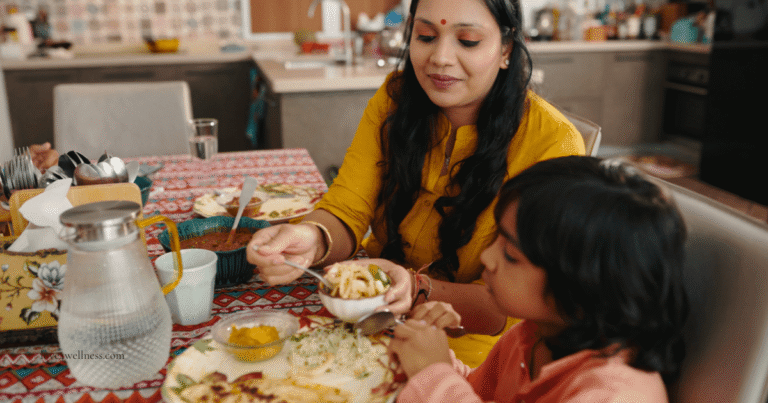
The single most powerful change costs nothing. A child asked “what did you get?” after every test learns precisely what is being measured and what is not. A child asked “what was interesting today?” learns something different. Marks matter, and I will never pretend otherwise. They simply are not the sum of a person. Communicate that consistently, and above all in the moments of failure when the child is watching hardest. Doing so builds the psychological safety that remains the strongest protective factor a family can offer.
Manage your own weather first
Given how reliably anxiety travels between parent and child, your own regulation is not a side issue. A parent who catastrophises about results, who describes examinations in life-or-death terms, or who cannot sit with uncertainty is teaching all three habits by demonstration. This is not a criticism. It is an invitation to get support for yourself, alongside your child. My manifesto says it more fully: your fear is not foolish. It simply should not be the loudest thing in the room.
Treat food, movement and sleep as mental health measures
Everything in the middle sections of this article converges into one practical instruction. Regular meals, daily movement and protected sleep are not the pleasant extras you get to once the studying is finished. They are among the few levers with direct, physical effects on how anxious a child feels; they are cheap, and they are entirely within a household’s control. Treat them accordingly, and treat the tuition timetable as the thing that must give ground.
Draw a line around the last hour of the night
Given what the sleep evidence actually shows, the useful boundary is narrow rather than sweeping. Rather than banning screens across the evening — a rule most families cannot keep and will quietly abandon — put the phone outside the bedroom overnight. One specific, enforceable change beats a comprehensive policy that collapses within a fortnight, and this particular one addresses the behaviour most closely linked to broken sleep.
Listen without rushing to repair
Finally, resist the urge to solve. When a child brings you something painful, the reflex is to fix it, minimise it, or explain why it is not so bad. Yet each of those, however kindly meant, teaches a child that their distress is an inconvenience to be managed. Anxiety in children often eases simply in the presence of an adult who takes it seriously and does not rush past it. What such an adult communicates, in word and action alike, is that the child’s inner life matters more than their mark sheet.
What a school can do
Reduce what gets ranked
Schools hold levers that no parent does. Consider every public ranking ritual — marks read aloud, lists on noticeboards, assemblies built around toppers. Each buys a small amount of motivation for a few children, at a high cost to everyone else. Reducing them costs a school nothing academically. Better still, it removes one of the most reliable sources of daily comparison in a child’s week.
Teach teachers to see it
Recognition can also be trained. A teacher who knows that anxiety may look like inattention, defiance, perfectionism or frequent trips to the sick room will interpret a struggling child accurately rather than disciplinarily. That distinction changes outcomes, and it costs a staff meeting. Building emotional vocabulary into the curriculum, and celebrating a wider range of achievement, works in the same direction.
One noticing adult is not a small thing
None of this requires a school to become something it is not. A teacher who notices a withdrawn child and asks one genuine question is sometimes the first adult that child has felt seen by all year. The intervention takes ninety seconds and no budget. Its effects can last considerably longer than the term in which it happened.
The question underneath all of it
A signal, not a verdict on you
Your child’s anxiety is not a character defect, a parenting failure, or evidence that something is fundamentally broken. It is a signal — among the most honest a child is capable of sending. What it signals is that something in their world has grown heavier than they can carry alone. Signals are useful precisely because they can be read.
Are we listening?
So the question was never whether to take it seriously. The question is simply whether anyone has stopped long enough to hear it. Every anxious child is asking to be heard, usually in a language that does not sound like asking. Learning to recognise that language is most of the work — and it is work that begins, quite unglamorously, with a different question at the dinner table tonight.
A note on getting help. This article is a starting point for understanding, not a substitute for support. If your child’s anxiety persists, intensifies, or begins to interfere with everyday life, please speak to a paediatrician or a mental health professional. In India, Tele-MANAS, the Government of India’s national mental health helpline, is free, available at any hour on 14416, and answered in more than twenty languages.