
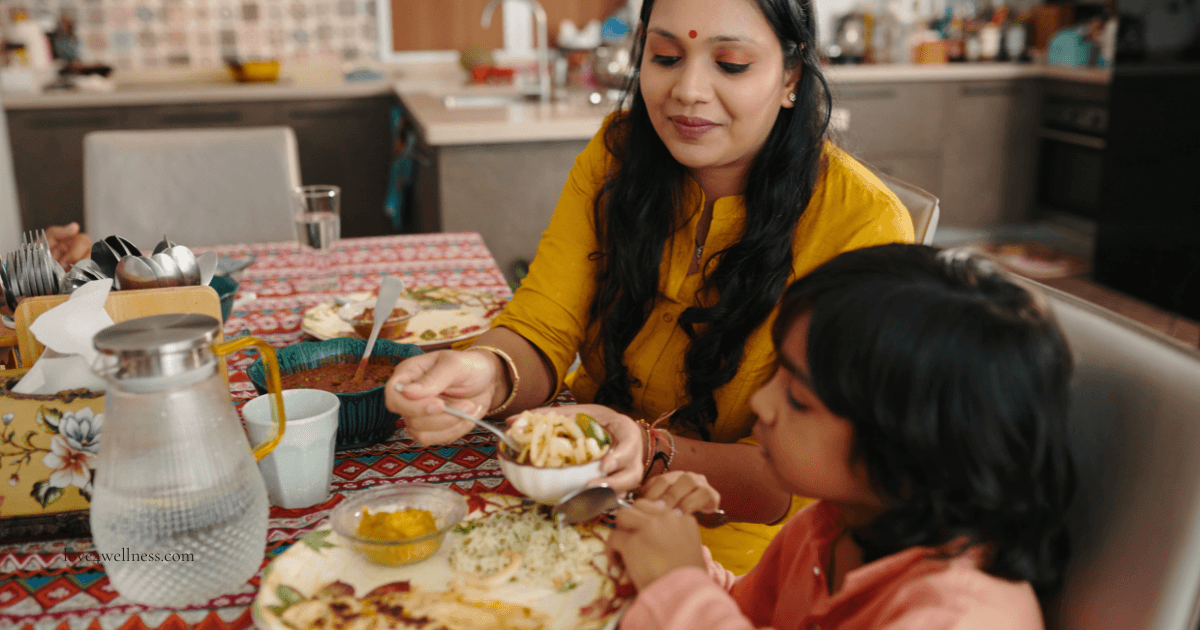
Your child’s attention, mood and memory are built from what goes on their plate. What the evidence really shows — and the small changes that matter most.
The question we never think to ask
The evening you blamed everything but the plate
Think back to the last time your child came home from school out of sorts. Restless, unfocused, not quite himself. You probably wondered about the homework load. Perhaps about a quarrel with a friend, or a bad night’s sleep. One question almost certainly did not come to mind: what did he eat today? Yet that may be one of the most useful questions you can ask. Food shapes attention, mood and memory far more directly than most of us were ever taught. The link between child nutrition and brain development is one of the better-proven findings in modern child health. It is also one of the least discussed at our dinner tables.
A conversation Indian families rarely have
We talk endlessly about marks in this country. These days we talk about screens and sleep as well. Food is treated differently. It comes up as a matter of growth, weight and immunity — rarely as a matter of thinking. A mother will worry that she has not packed enough for her son’s long school day. Rarely will she wonder whether his afternoon slump has anything to do with the biscuits that stood in for lunch. That gap is understandable. The science linking child nutrition and brain development is recent, and it sits in journals no parent has any reason to read. It is a gap worth closing, and this article is an attempt to close it.
What this article will and will not claim
Let me set the limits early, because nutrition writing tends to promise too much. Nothing here will tell you that a food raises marks, or that a tablet sharpens a child, or that a plate can be tuned into a result. The evidence does not support such claims, and I will point out its weak spots as I go rather than hiding them at the end. What the evidence does support is narrower and far more useful. A child who is well fed thinks, feels and learns better than the same child who is not.
How the plate builds the brain
An organ made of raw materials
Start with something easy to forget. The brain is a physical organ, and like every other organ, it is built from what the body takes in. Fats, proteins, vitamins and minerals are not simply fuel to be burnt. They are the substance of brain cells and the covering that wraps around them. They also supply the raw material for the chemicals that decide whether a child feels settled or agitated. About sixty per cent of the brain’s dry weight is fat — dry weight, because the living brain is mostly water. Take the water away and what remains is largely fat. That fat comes from food.
Why school age still counts
Most nutrition advice is aimed at pregnancy and the first few years, and with good reason. The brain grows fastest then. Parents of older children often assume the window has shut. It has not. A recent review of nutrition, brain and learning across school age describes the years from five to eighteen as an important stage in their own right. The brain keeps rewiring itself throughout, in exactly the ways school demands. The teenage brain in particular goes through a major rebuild. Your Class 8 child is not a finished building. The work is still going on.
Child nutrition and brain development in one sentence
This point belongs here rather than at the end, because it shapes all the advice that follows. The most widely cited review of nutrition and children’s brain development found something that inverts how food is usually sold to parents. Observational studies do link nutrients to how well children think. However, studies focusing on individual nutrients show variable outcomes. The Nutrition Reviews team reached the same conclusion more than a decade later. No single nutrient is the lever. The whole pattern of eating, held steady over years, is what appears to matter.
The gut and the brain are in constant conversation
The second brain, properly understood
One of the more striking findings in neuroscience over the past twenty years is the gut–brain axis. It is a two-way signalling network running between the digestive tract and the brain. The gut runs a nerve system of its own, which is why it is often called a second brain.
A 2025 review of nutrition, gut bacteria and the growing brain describes how the microbes living in a child’s gut reach the brain. They work through inflammation in the body, through chemicals they release, and through the barrier that protects the brain. Diets built on whole, high-fibre, lightly processed foods encourage a wider range of these microbes. A varied gut, in turn, supports a healthy brain. The gut has earned its nickname.
What gut serotonin does and does not do
Here I have to correct something you have almost certainly read elsewhere. It is true that the gut makes most of the body’s serotonin — cells in the gut lining produce ninety to ninety-five per cent of it. What does not follow is the next step, which countless wellness articles take anyway. Feeding the gut does not top up the serotonin in your child’s brain. Gut serotonin cannot cross into the brain. The two supplies are largely separate, and different enzymes make them. The gut does genuinely affect mood — but through nerve signals, immune activity and the chemicals its microbes release, not by sending serotonin upstairs.
Feeding the microbes that feed the mind
The practical advice survives that correction untouched, which is exactly why the correction is worth making. Fibre, fermented foods and a wide range of plants support a varied gut. A diet built on maida, sugar and packaged snacks narrows it. Indian kitchens already hold everything required. Curd and buttermilk. A rotating set of dals. Vegetables that change with the season. Whole grains such as bajra, jowar and ragi. Nothing here is imported, and nothing is costly. What it mostly needs is that the everyday meal is not quietly pushed aside by the packet.
Thrive Tip
Add one fermented food a day, and one new plant a week.
A katori of curd with lunch, a glass of buttermilk after school, or a spoon of home-set yoghurt with dinner needs no planning at all. Then, each week, put one vegetable, dal or millet on the table that your family rarely eats.
Variety feeds the gut better than quantity does — and adding something meets far less resistance than taking something away.
The nutrients that do the heavy lifting
Omega-3 fats and the wiring of neurons
Of all the fats the brain is built from, the omega-3 family matters most for how it performs. One of them, DHA, sits inside the membranes of brain cells and allows them to signal quickly. Another, EPA, seems to influence mood and attention. The clearest part of this research concerns shortage: when these fats run low, thinking suffers. What remains genuinely unsettled is whether adding more helps a child who is already well fed. So treat omega-3 as a requirement to be met, not a booster to be pushed.
What plant sources cover, and what they do not
The picture here is more reassuring than it is usually painted, as long as the distinction is drawn properly. Walnuts, flaxseed and chia supply ALA — the omega-3 the body cannot make for itself. A tablespoon of ground flaxseed, or a small handful of walnuts, comfortably covers a child’s daily need. ALA is rarely the problem. The difficulty is narrower. The body converts ALA onward into EPA at perhaps five to ten per cent, and into DHA far less efficiently still — a few per cent at best. So vegetarian children meet their ALA needs easily, while sitting lower on DHA than children who eat fish.
How much the DHA gap actually matters
Lower is not the same as harmed, and the evidence does not call for alarm. Dietetic bodies say plainly that the significance of reduced DHA in vegetarians is unknown. Vegetarian children have not been shown to suffer any delay in sight or mental development. One study found that a vegetarian diet in pregnancy was not linked to poorer thinking in children at six and seven, even though those mothers had lower DHA.
Two useful points follow, rather than a warning. Omega-6 fats compete with ALA for the same enzymes, so a diet heavy in omega-6 holds back whatever conversion does happen. That makes your cooking oil a real lever: mustard oil carries a far better balance than sunflower or safflower. And for a strictly vegetarian child, DHA from algae supplies the one thing plants cannot. Worth raising with a paediatrician. Not an emergency.
Iron, and India’s most under-recognised gap
If one nutrient deserves the attention of Indian parents above all others, it is iron. Iron carries oxygen to brain tissue. It is also needed to make dopamine, the chemical behind motivation, attention and reward. The size of the shortfall here is not a matter of guesswork. The National Family Health Survey found that 67 per cent of Indian children under five are anaemic, along with 59 per cent of adolescent girls. Both figures had risen, not fallen, since the previous round. Iron shortage is the leading cause. A tired, unmotivated, distracted child may be exactly that — and no amount of discipline will reach it.
The lime on the dal was never an accident
The remedy, happily, is ordinary. Dals, rajma, chana, palak, methi, jaggery and — for families who eat it — meat all supply iron. What matters nearly as much as the source is the company it keeps. Vitamin C sharply increases how much iron the body takes from plant foods, while tea and coffee alongside a meal cut it down. The squeeze of lime over dal, the tomato cooked into the palak, the amla eaten beside the meal — these pairings were worked out long before anyone could explain them. If you suspect a shortage, though, ask for a blood test rather than guessing. This is a diagnosis, not a hunch.
Zinc, the mineral of learning and memory
Zinc rarely comes up in conversations about children’s food, yet it gathers in the part of the brain that forms memories. It also takes part in the systems governing attention. Children low in zinc have repeatedly been found to have more trouble concentrating, though nobody is sure which way that runs. Indian kitchens supply zinc generously: whole dals, sesame, pumpkin seeds, eggs, dairy and the millets, bajra and jowar especially. Maida supplies very little. That is one more reason the shift from millet to refined flour is not the harmless change it looks like.
B vitamins and the particular case of B12
The B vitamins build brain chemicals, protect nerve fibres and keep the brain’s energy supply running. Most of them are easy to come by in an Indian diet, since greens, dals and chana cover them comfortably. Vitamin B12 is the exception, and a serious one. It is found almost only in animal foods, so it runs low in many vegetarian families and lower still in vegan ones. A long shortage can damage the nervous system before anybody notices. Dairy and eggs help. Children on a fully plant-based diet need a supplement, and their families need a paediatrician’s guidance rather than mine.
Magnesium, sleep and the calm that learning needs
Magnesium takes part in hundreds of reactions in the body, including those that handle stress and sleep. Its relevance to a student is indirect but quite real. The brain files away what it has learned during sleep, so a child who sleeps badly learns badly, whatever happens in class. One study of 810 children given omega-3, omega-6, magnesium and zinc reported fewer attention difficulties after twelve weeks, and less trouble falling asleep. Read it carefully, though: it had no comparison group and it tested a company’s own product. The sleep connection is still worth holding on to. Bananas, greens, almonds, cashews, pumpkin seeds and rajma all supply magnesium.
Also Read: Sleep Is Not Laziness: Why Your Teen Needs More of It
Colour on the plate as the brain’s defence
The body constantly produces waste that damages cells, and the growing brain is not spared. Fruits and vegetables carry the substances that counter this damage — not bottles, and not tablets. The useful rule is colour. Greens, tomatoes, carrots, capsicum, papaya, guava, amla, and berries where they are affordable. A plate carrying three colours is doing more for a child’s brain than a plate carrying one. The rule is simple enough to hand to the child, too. Ask them to count the colours at dinner, and they will start noticing on their own.
Why I say food and not supplements
A pattern runs through everything above, and it deserves naming. The strongest findings on child nutrition and brain development concern shortage. The weakest concern is topping up children who already eat well. Research increasingly suggests whole foods that deliver nutrients in combinations matter more than any nutrient alone. So for a child, food should be the default. Keep supplements for a gap a doctor has actually found, choose them with that doctor, and treat B12 for plant-based families as the clearest exception. A shelf of bottles is no substitute for a decent daily meal. Children can be harmed by too much as easily as by too little.
Nutrition reaches the emotional brain too
What forty thousand Norwegian children suggest
Food does not stop at attention and memory. It reaches how a child feels. One study followed more than 40,000 children in Norway, measuring their diets at several points from pregnancy through age seven. Healthier diets were linked to fewer signs of depression and anxiety at eight. Those children also scored higher for confidence, conscientiousness and imagination. The pattern held across several time points, which suggests a sustained way of eating rather than any single meal. It remains an observational study, so it shows a link and not a cause. But it is a very large one.
The explanation parents reach for first
Here is why the finding matters inside an Indian home. When a child turns tearful, irritable or unable to settle, we reach for familiar explanations. Temperament. Laziness. Bad company. Too much phone. Exam pressure. The body rarely makes the list at all. I am not suggesting it belongs at the top. I am suggesting it belongs on the list. A child who is short of iron, chronically short of sleep and living on refined flour will look anxious and unfocused. No conversation about attitude will reach that cause.
Also Read: Why Your Child Is Anxious
Honesty about which way the arrow points
One more paragraph is owed here, and it is the one most nutrition articles leave out. Diet and mood push on each other in both directions. An anxious, exhausted or unhappy child eats differently, usually worse. Children who struggle to concentrate are also known to eat differently from their peers. So when we notice that a struggling child eats badly, we cannot assume the food came first. It may have. It may not have. Improving the food is worth doing under either explanation.
The packet problem in a modern Indian childhood
What changed in twenty years
What an Indian child eats has shifted sharply within one generation. Packet biscuits, instant noodles, extruded snacks, sweet drinks sold as juice and sugary breakfast cereals now fill hours that once belonged to home cooking. Dinner may still be dal and sabzi. The four hours before it increasingly are not. This is the part of the diet that nobody plans, and everybody supplies. It is also where most of the damage happens — chiefly by pushing aside the foods that carry every nutrient described above.
What the ADHD evidence actually shows
You will have seen alarming headlines linking junk food to attention disorders. The real finding is more modest. A 2024 analysis combining nine studies and more than 58,000 children found that children eating more junk food were around 25 per cent more likely to show signs of ADHD. That is a meaningful link, not a doubling. And as we have just seen, which came first remains unresolved. What the finding does justify is replacing packet snacks with real food. What it does not justify is telling a struggling child that his difficulties are his own doing.
The sugar myth worth retiring
One belief deserves to be set aside, and I say so knowing almost every parent holds it. Sugar does not make children hyperactive. This has been tested properly, in trials where neither the parents nor the children knew who had received sugar. A review of those trials, published in JAMA, found no effect on behaviour or thinking at all. The researchers concluded that parents believe it because of what surrounds the sweets — they appear at parties and functions, and children run wild at parties anyway. The real case against a high-sugar diet is quieter. It pushes out better food, and it feeds the wrong microbes. That is reason enough to limit sugar without the myth.
Breakfast is the most studied meal of the school day
The evidence, and who paid for it
If any single meal has been examined closely, it is breakfast. A review of 45 studies on breakfast and thinking in children concluded that eating breakfast, rather than going without, brings short-term gains in attention, self-control and memory. The gains were clearest in undernourished children. Since this article criticises industry-funded evidence elsewhere, I should tell you that this particular review was paid for by a breakfast cereal company. Its findings match the wider research, and the Frontiers review quoted earlier reaches the same conclusion independently. But you are entitled to know.
The crash that arrives in second period
What the breakfast contains matters less than researchers once hoped, but the practical logic still holds. Refined cereal, white bread or a sweet drink releases energy quickly. The dip that follows usually lands in the middle of the morning — precisely when a child most needs to concentrate. Whole grains, some protein and a little fat release energy steadily instead. Across a school day that runs until lunch on whatever was eaten at seven, that is not a small difference.
The Indian breakfast table was already right
Fortunately, our own repertoire suits this unusually well. Idli with sambar. Upma with vegetables. Poha with peanuts. Dalia with nuts. Ragi porridge with banana. Dosa with chutney. Egg on multigrain toast. Each of them puts a whole grain or a fermented batter together with protein and fat. Nothing needs importing, and nothing needs inventing. What displaced these dishes was never taste. It was the morning rush — which is a scheduling problem rather than a food problem, and very often solvable the night before.
The Indian kitchen, honestly appraised
What the everyday meal gets right
Set aside the claims made for individual spices for a moment. Look instead at the shape of an ordinary Indian meal. Dal with rice or roti supplies complete protein. Ghee carries the vitamins that need fat to be absorbed. Sabzi brings fibre and colour. Curd delivers live cultures to the gut. Add the millets, the seasonal vegetables and the modest place traditionally kept for sweets, and the everyday thali turns out to match, quite closely, what the nutrition research recommends. That is the strongest claim available here. It also happens to be a genuinely strong one.
Where the spice research actually stands
The claims made for turmeric deserve far more caution than they usually get. Curcumin, the substance behind the colour, does fight inflammation and cell damage, and the laboratory and animal work is genuinely interesting. Research on people is another matter. Experts reviewing the evidence report that trials in humans have not shown a clear benefit for memory or thinking. Nearly all of that research, moreover, was done on ageing adults rather than children. Haldi doodh is a pleasant, harmless and culturally rooted drink. It is not a proven brain treatment, and I would rather say so than flatter the tradition.
Does adding pepper improve curcumin absorption
There is a real point about preparation hiding here, though, and it is worth knowing. Curcumin dissolves in fat rather than water. Black pepper contains piperine, which slows the body’s clearing of it. In one much-cited study, adding a little piperine to a large dose of curcumin raised absorption sharply — although the trial was small, funded by the company selling the piperine, and its headline figure has not been well repeated since.
Milk helps too. Researchers testing how curcumin dissolves found that warm dairy milk drew out many times more of it than water, while almond and coconut milk did poorly. So haldi doodh made with warm milk and a pinch of pepper does deliver more than turmeric stirred into water. Keep the scale in view, though. A teaspoon of turmeric holds roughly a twentieth of the dose used in that study, and a large increase on a very small amount is still a small amount. Getting more out of a small dose is not the same as taking a medical one.
A word of caution about tonics for children
The same caution applies more firmly still to herbal preparations. Brahmi, shankhpushpi and ashwagandha appear in tonics sold widely for children’s memory and concentration, and the claims on the label are confident. The evidence in children is thin. The right dose for a child is not settled. Safety in this age group is not well established, and ashwagandha in particular has raised safety questions in recent years. Long traditional use is a reason to study something. It is not a reason to give it to a growing child. Ask a paediatrician or a trusted Ayurveda expert before any tonic enters the house.
What happens between home and home
The tiffin box as a nutritional decision
A large share of what a child eats in a day is settled at seven in the morning, by a parent in a hurry. A tiffin that covers the essentials is not complicated: a whole grain, a protein, a vegetable and a fruit. Roti with dal and a boiled egg. Curd rice with a vegetable and a slice of papaya. Paneer paratha with cucumber. The change that matters most, though, is the smallest one. Replace the packet that travels alongside the meal, because that is what gets eaten first and crowds out the rest.
What the school meal scheme really achieved
India runs the largest school feeding programme in the world, now called PM POSHAN. It is worth knowing what the evidence says rather than what we assume. A review of 31 studies of the scheme found steady gains in one area: more children enrolled, attended regularly and stayed on, and fewer dropped out. Results for growth and nutrition were mixed and often small. The reviewers described the effect on marks as unclear. Getting children into school and keeping them there is the programme’s real achievement. That is not a small thing, and overstating it helps nobody.
The objections worth taking seriously
“My child is a fussy eater, and mealtimes are already a battle”
This is the objection I hear most, and it is entirely fair. Nothing in this article works if it becomes pressure, because a contested table produces worse eating rather than better. The research on fussy eating is consistent and mildly infuriating. Offering a food again and again, calmly, works. Forcing does not. A child may need to meet a vegetable ten or twelve times before touching it, and every meeting has to be unremarkable. Serve it, say nothing, let it be refused, serve it again next week. Slow — and far more effective than a fight.
“Good food is expensive and my time is short”
Also fair, and here the evidence sits unusually on the side of the modest budget. Look at the foods this article keeps returning to. Dals, millets, seasonal vegetables, curd, eggs, groundnuts, jaggery. Every one of them gives more nutrition per rupee than the packet snacks it would replace. The single most useful change available to most families is buying fewer packets, and that saves money rather than costing it. Time is the harder constraint. Soaking, chopping or setting curd the night before moves the work to an hour when it exists.
“Is this one more thing for me to feel guilty about?”
I hope not, and I have tried to write it so that it is not. Parents here already carry an extraordinary weight of expectation about their children’s futures. I have no interest in adding food to the list of ways to fall short. So please put the guilt down. Nothing here needs to be done perfectly, and nothing here is about the past — the meals already eaten are not a verdict on anything. What is on offer is a lever you may not have known you had. It is not another examination to sit.
What a parent can do, starting this week
Crowd out rather than cut out
Begin by adding rather than banning, because prohibition invites resistance and secrecy in equal measure. Put more of the good things where a child will meet them. An extra vegetable at dinner. Fruit cut and left where hands pass. Curd with lunch. Nuts in the tiffin. The appetite for filler tends to shrink on its own. This approach protects something important, too. A child raised on foods sorted into allowed and forbidden learns an anxious relationship with eating, and that is a harm in itself.
Make variety ordinary early
Children accept range most easily when range is simply what happens. A child who meets many vegetables, many textures and many spices in the early years arrives at ten with wider tastes. The gut research suggests they arrive with a more varied gut as well. If your child is already ten, nothing is lost — the same process merely runs slower, and it answers to the same unremarkable repetition. Serve widely, comment little, and let familiarity do what persuasion cannot.
Let children into the kitchen
Children eat what they have had a hand in making. Washing rice. Tearing coriander. Rolling a crooked roti. Shelling peas. Stirring something under supervision. Each of these turns a dish from something imposed into something owned. It is also exactly the sort of hands-on learning I argue for elsewhere on this site — a child learning by doing rather than by being told. The kitchen teaches a good deal more than eating.
Also Read: Educate” Means to Draw Out, Not Pour In — real-learning-draw-out-not-pour-in
Choose consistency over purity
A child who eats well most of the time will be fine. The birthday cake, the Diwali sweets and the chips at the school fete are not setbacks. They are childhood. Anxiety about pure eating carries a real cost of its own — stress for you, and an uneasy relationship with food for your child. So aim at the ordinary pattern of the week rather than the contents of any single plate. Consistency is achievable. Perfection is not, and chasing it does damage.
Eat the way you want them to eat
Finally, and least conveniently, children take their cue from what they see. A parent who eats vegetables with visible enjoyment is teaching constantly, without a word. So is one who talks about food with interest rather than worry, or who sits down to a meal instead of eating at the counter. Where the adults in a house live on tea and skipped meals, no instruction to the child will outweigh the demonstration in front of them.
Thrive Tip
Fix breakfast the night before.
Soak the dalia or the ragi. Grind the batter or keep it ready. Boil the eggs. Chop the vegetables for the upma. Portion out the nuts.
Five minutes after dinner removes the excuse that mornings reliably supply — and a child who leaves the house having eaten a whole grain with some protein starts the first lesson equipped rather than empty.
What the research still cannot tell us
The limits worth stating plainly
Honesty about the gaps matters more than a tidy ending. Much of the evidence here is observational, which shows a link rather than a cause. Trials of single nutrients in well-fed children have repeatedly disappointed. The work on gut microbes, though genuinely exciting, is young, and much of it comes from animal studies. Anyone who tells you the science of child nutrition and brain development is settled is selling something. So is anyone who claims a particular product follows from it. What we can say with confidence concerns shortage, dietary pattern and breakfast — and that is quite enough to act on.
Food is the foundation, not the whole building
Child nutrition and brain development matter a great deal. Even so, food is one influence among many, and it would be dishonest to leave it standing alone. Sleep. Movement. Feeling safe and loved. Unhurried time. A home where questions are welcome. Each of these shapes a child’s thinking at least as much as the plate does, and they act on one another in ways nobody has fully untangled. No quantity of walnuts will make up for a child who feels unsafe or is never allowed to rest. Food is the foundation of the building. It is not the building.
The plate is a place of quiet power
Back to the irritable evening
Return, finally, to the child who came home out of sorts, and to the questions you asked that evening. The homework, the friendship, the sleep — every one of them was reasonable, and any of them might have been right. This article only wanted to add one more question to the list, and to show that it belongs there. What did he eat, and when? Sometimes the answer will be ‘nothing since a rushed breakfast at seven’. Occasionally that will be the whole explanation.
What you are actually building
There is a quieter reason to care, though, well beyond the difficult evenings. Every dal you cook. Every fruit that goes into a tiffin. Every morning your child leaves the house having genuinely eaten. Each one adds a little to an organ that is still under construction. These acts never announce themselves, and they will never appear on a report card. They remain, all the same, among the most concrete things a parent can do for a child’s mind — undramatic, cumulative and entirely within your hands. Feed them well, feed them without fear, and let the plate do its quiet work.






One Comment
Comments are closed.