
Is coaching necessary for JEE and NEET? For some children, yes. For many, a smaller dose than the brochure sells will do. Here is how to tell which your child needs, from no coaching at all to a move to Kota.
The brochure on the dining table
An October evening in Class 10
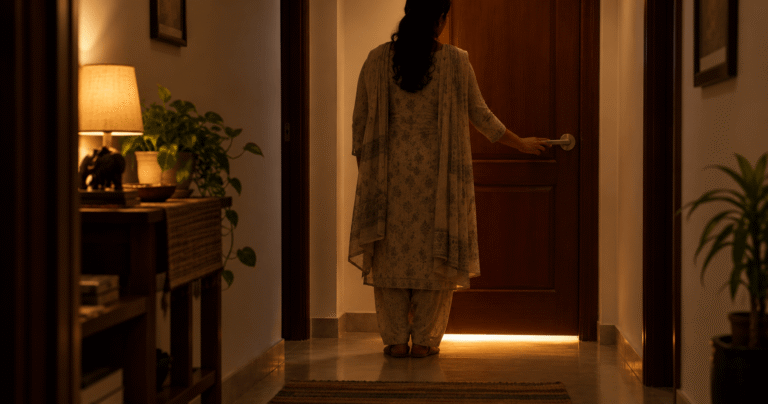
It is October, and the half-yearly papers have just come home. Aditi is fifteen and in Class 10 at a CBSE school in Chennai. Her mathematics marks are good enough that a cousin has started saying “IIT” at family functions. On the dining table lies a glossy brochure for a two-year integrated programme. It promises school and JEE preparation under one roof, a “tie-up” school that will “take care of attendance”, and a scholarship test this Sunday. So her parents are left with the question many Indian families ask every autumn: is coaching necessary for JEE and NEET, or is it simply what everyone does?
Aditi is a composite. I have drawn her from the order in which this decision usually reaches a home. The brochure arrives before the child has said what she wants, and the deadline arrives before anyone has talked it through. No single family sat for this portrait. The order of events is the real part, and I have given it a face only so that each question below has somewhere to land.
The question underneath the brochure
The honest answer to “is coaching necessary for JEE and NEET?” is neither yes nor no. Coaching helps some children a great deal and others a little, and it costs a few of them far more than it gives. Which of those your child is depends on things the brochure never asks about. What does she enjoy? What does she already do well without help? How well does her school teach? And how many hours are actually left in her week?
So this article takes the evidence first, then five levels of help, from no coaching at all to a move to a coaching town. Finally, it sets out the questions that tell you which level fits your child. Elsewhere I have explained what the topper hoardings leave out and how to question an institute across the admissions counter. Both of those pieces assume the family has already decided to enrol. This one sits a step earlier, at the decision itself.
Why the honest answer is not a simple “no”
Almost every successful candidate was coached
Let me begin with the evidence that makes coaching hard to refuse, because a parent deserves to hear it plainly. In Tamil Nadu, a committee headed by Justice A.K. Rajan, a retired Madras High Court judge, studied medical admissions after NEET arrived. It found that 99 per cent of the students who won medical seats in 2019–20 had been coached before the exam. Most of them had sat it more than once. Engineering shows a similar pattern at the top. An analysis by IIT Kanpur found that every fourth student admitted to an IIT in 2025 had prepared in Kota. So had about half of the top hundred.
Reading the Tamil Nadu figure fairly
That 99 per cent deserves a fair reading. The state government set up the Rajan committee to study how NEET affected poorer, rural and Tamil-medium students. Its report then became the basis for Tamil Nadu’s bill seeking exemption from the exam, so it speaks for one side of a live political argument. Even so, the coaching figure describes the students who were actually admitted, which is exactly the group a parent cares about. Read plainly, it says that in Tamil Nadu a medical seat won without any coaching has become rare.
Why that number still cannot settle the question
Yet “most successful students were coached” is a different claim from “coaching made them successful”. When nearly every serious candidate is coached, nearly every winner will be coached too, simply because of who sat the exam. The best-known institutes also screen their intake through scholarship tests. As a result, many of their toppers were strong before they ever arrived, and their results tell you about recruitment as much as teaching.
Older data from the IITs show the gap between those two claims. In 2016, JEE Advanced candidates were asked how they had prepared. More than half of those offered an IIT seat declared self-study as their mode of preparation, according to the organising committee’s own report. That was self-reported and ten years ago, and the field has grown since, so it proves nothing about your child in 2027. It does show that the road without full-time coaching was never closed.
What research on tuition actually measures
Research on private tuition in general points the same way. A 2026 review in an NCERT journal, pooling seven Indian studies of nearly 8,000 secondary students, found that tutoring gave school marks a small lift. The lift was real, but modest. That review measured ordinary school achievement rather than entrance ranks, so it cannot be stretched to cover JEE or NEET. Still, it is a useful check on the belief that paid help transforms results by itself.
What the government’s own panel concluded
The government has reached a similar view from a different direction. In June 2025, the Ministry of Education set up a committee under Vineet Joshi, the higher education secretary, to examine coaching dependence and dummy schools. Its draft recommendations have been reported in the press rather than published. According to those reports, it treated the gap between CBSE’s conceptual teaching and the multiple-choice entrance papers as a root cause of the reliance on coaching. It also suggested voluntary preparation classes on school campuses after school hours, and some weight for Class 12 marks in admissions.
In plain words, the panel found that children turn to coaching mostly because school and the entrance paper ask for different things. Its answer is to narrow that gap inside schools rather than to send more children outside them. However, the committee has met only a handful of times and has no deadline for a final report. So treat its ideas as a direction of travel, not as rules your child’s school must already follow.
What coaching actually sells
Four things packed into one fee
A coaching fee buys four different things, and children need them in very different amounts. The first is content beyond the school syllabus, or taught to a greater depth. A plain Class 11 problem on friction, for instance, becomes the five-step version the entrance paper actually sets. The second is exam technique: speed, knowing which questions to leave, and handling negative marking calmly. Third comes structure, meaning a timetable, weekly tests and someone checking. Last of all is company, a room full of teenagers chasing the same paper.
Matching each one to a child
Seen this way, the question changes shape. A child who works steadily alone, at a school that teaches well, may lack only technique, and a test series supplies it. By contrast, a bright but scattered child may need structure far more than extra content. A child whose school stops at the board syllabus may genuinely need the content. And a child who mainly wants to be where her friends are is buying company, which is the most expensive way to get it.
In an Indian home, these needs turn up as ordinary sentences at the dinner table. “She finishes every NCERT exercise but freezes on a timed paper” points to technique. “He understands it all but never sits down unless someone chases him” points to structure. Then there is “Her school rushed through the Class 11 physics portion and moved on”, which points to content. Listen for the sentence that describes your child, because each one calls for a different, and differently priced, kind of help.
Five doses of help, from none to Kota
Why I think of it as a dose
Medicine offers a useful habit here. A good doctor gives the smallest dose that does the job and raises it only if it does not. Coaching is rarely thought about this way. Instead, families tend to begin at the highest dose they can afford, because the brochure frames anything less as falling behind. The five levels below run from least to most. Each one is a sound choice for some child, and each has a cost the brochure leaves out.
Dose one: school, taken seriously, with free help beside it
For a child with a sound school and steady habits, the first dose costs little beyond attention. It means treating the NCERT textbooks as the foundation they are and working every exercise fully. Free practice then sits alongside. The Ministry of Education and IIT Kanpur run SATHEE, a free JEE and NEET platform with lectures by IIT and IISc faculty, along with mock tests. In Tamil Nadu, the School Education Department has run free NEET coaching for government-school students, including residential camps in some districts.
For families who cannot afford private coaching, this is a real route, and plenty of children take it. For families who can, it is still a sensible place to begin. Its limit is self-direction, because a free platform will not ring the doorbell if your child skips a week. So dose one suits the child who already keeps her own timetable. It can also suit one who is willing to try under a light weekly check from a parent.
Dose two: a test series and nothing more
Some children understand the material well and lack only practice under exam conditions. For them, a test series is the precise dose: a full mock paper every week or fortnight, followed by a careful analysis. It builds technique and shows where the child stands nationally. Moreover, it takes perhaps four or five hours a week rather than twenty. School, sport and sleep stay largely intact. Suppose the first few results show gaps in content rather than in speed. That is your evidence to step up a dose, and it is evidence you can trust.
Dose three: part-time coaching beside school
The third dose is evening or weekend coaching while the child attends school normally. Many Chennai families who choose coaching sit here, and it can work well. The Ministry of Education’s 2024 guidelines for coaching centres set out how it is meant to run. Classes should not clash with school hours, partly to stop dummy schools from forming. They should not exceed five hours a day, should not start too early or end too late, and should leave a weekly day off. Hold any institute to those limits, because your child lives school and coaching added together.
Dose four: the integrated programme
The fourth dose is the integrated programme, the kind of brochure on Aditi’s table. Here the coaching institute becomes the centre of the child’s day, and school shrinks to a formality. Often this runs through a tie-up with a school that does not expect regular attendance, which is what people mean by a dummy school. The appeal is obvious, because six or seven extra hours a day go to entrance preparation. The costs are harder to see from the brochure.
What a dummy school actually risks
Start with the rules. CBSE has warned that students found missing from school during surprise inspections may not be allowed to sit the Class 12 board exams. It added that the 75 per cent attendance requirement stands. The board also said the responsibility falls on the student and the parents, not only the school. A child caught out may be sent to the open-schooling (NIOS) examinations instead. That is a heavy risk to carry into the same year as the entrance exams.
Then there is everything school gives that coaching does not. There are the practicals, friendships that have nothing to do with rank, a teacher who notices a change in mood, and the games period. Even TVF’s Kota Factory, a series about JEE aspirants in Kota, makes room for this. In its first season, Jeetu Bhaiya, the physics teacher his students adore, tells his class to take a break from JEE work and go back to school for their practicals. It is a small scene. Still, the point lands, because the one adult those students trust most is the one sending them back to school.
Dose five: moving to a coaching town
The highest dose is relocation, to Kota or another hub, usually into a hostel and sometimes with a parent following. It adds distance from home to every other cost. In July 2025, the Supreme Court laid down guidelines on student mental health that apply to coaching institutes. They ask institutes to avoid separating students into batches by marks or shaming them publicly. They also require heightened protection in coaching hubs, and the Court named Chennai alongside Kota, Jaipur, Sikar, Hyderabad, Delhi and Mumbai.
Notice that Chennai is on that list. For a Chennai family, the highest dose may not mean a train to Rajasthan. It can mean a residential programme across the city, and the same questions apply to it. How the local institutes differ from the Kota model is the subject of a separate guide to JEE and NEET coaching in Chennai.
When to start, and why earlier is rarely better
The sixteen-year line
Foundation courses for Class 7, 8 or 9 are sold on the fear of falling behind. The government’s own guidelines draw the line elsewhere. Under them, coaching centres should not enrol students below sixteen, or before the secondary school examination. The Rajan committee, for its part, noted with concern that many NEET aspirants were being coached from Class 8 onwards. A two-year programme starting in Class 11 is already long. Starting four years earlier mostly stretches the strain over more of childhood.
What the early years are actually for
Classes 7 to 10 do matter for JEE and NEET, just not in the way a foundation brochure suggests. These are the years to make mathematics feel solid, so that algebra does not wobble when calculus arrives. They are also the years to read beyond the textbook and to find out whether science is a pleasure or a duty. A child who reaches Class 11 curious and rested has an advantage no foundation batch can sell. The same years shape the stream decision, which I take up in the guide to choosing a stream after Class 10.
Is coaching necessary for JEE and NEET for your child? Read the evidence first
Whose goal is it?
The most important question sits beneath the coaching one. It is whether the goal belongs to your child. A goal that is truly hers sounds like “I want to know how a jet engine works” or “I keep thinking about the doctor who treated my grandmother”. A borrowed goal sounds different: “everyone in my class is doing it”, or “Papa will be upset if I don’t”. Neither child is wrong to feel what she feels. Coaching, however, amplifies whatever lies underneath. It gives a child with her own goal a faster road, and it gives a child carrying someone else’s a longer and harder one.
What does your child do without being asked?
Evidence of aptitude and interest lives in what a child does unprompted. Does she try the harder problems at the end of the chapter because they are fun? Will he explain a biology diagram to a younger cousin without being asked? Does she still enjoy physics in the week after a bad test? These signs hold up across two demanding years. A good Class 9 mark in mathematics is welcome, of course, but it is weaker evidence than a steady, voluntary pull towards the subject.
When the dream began at your own desk
Sometimes, reading the questions above, a parent realises that the IIT or medical dream started with them. That realisation usually comes from love, and there is no shame in it. Children do sense the hopes we never quite say aloud, as I explain in the piece on how worry passes from parent to child. So say the hope once, clearly, and then ask what your child wants and listen to the full answer. If the two differ, knowing when to push and when to step back matters more than any coaching decision. Nudge, by all means. But a two-year programme is a long way to force a child down a road she did not choose.
Thrive Tip
Ask your child to teach you one problem they enjoyed this week. If they light up while explaining it, you have learned something real about their interest. If they shrug, you have learned something too, and both answers belong in the coaching decision.
Count the week in hours
A Class 11 week, added up
Before you sign anything, add up the week your child would actually live. The numbers below are only an illustration, so replace them with your own. Take a school day of about seven hours, plus an hour of travel. Add part-time coaching of three hours on four evenings, with over an hour on the road in city traffic. Then add homework from both school and coaching, at perhaps two hours a night. On a coaching day, that comes to more than fourteen hours of study and travel. Finally, add a Sunday test of three hours and its analysis.
Laid out like that, the arithmetic is sobering. A fourteen-hour weekday leaves about ten hours for sleep, meals, a bath, family and anything else a teenager might want to be. Something has to give, and it is usually sleep. So write the week down on one page with your child before you commit. A timetable that looks reasonable on a brochure can look very different once it is added up.
Sleep, movement and one free day
Teenagers need eight to ten hours of sleep a night, according to the American Academy of Sleep Medicine. I have written about why a sleepy teenager is not a lazy one, and a coaching week should protect that sleep rather than borrow from it. Daily movement matters too, even twenty minutes of walking or an evening game of shuttle. The reasons are set out in the piece on movement as medicine.
Time outdoors, a proper breakfast and one genuinely free day a week belong in the plan from the start. The coaching guidelines themselves ask for a weekly day off, so treat that as a floor. If board-season nerves are already showing, the practical steps in the article on exam stress in teenagers apply here as well.
The Tamil Nadu picture
State Board, CBSE and the entrance paper
For Tamil Nadu families, the gap the Joshi panel described has an extra layer. The Rajan committee reported that NEET is more closely aligned with the CBSE curriculum. It also found that after NEET arrived, State Board students lost ground in medical admissions while CBSE students gained. For a State Board student aiming at NEET or JEE, then, the content and technique doses may matter more. Her board paper and the entrance paper simply sit further apart. The board choice affects TNEA too, in ways I set out in the article on CBSE, State Board and the TNEA cutoff.
Free help for government-school students
If your child studies in a government or government-aided school, ask early about the state’s free coaching. Coverage has varied from year to year and from department to department. In 2025, for instance, more than 8,200 government-school students received a free NEET crash course. Yet in May 2026, the Adi Dravidar Welfare Department’s NEET and JEE classes were reported to have stopped. So check with the school each autumn rather than assuming. For these families, the state’s 7.5 per cent reservation in professional courses can matter as much as any coaching.
What the money could buy instead
The Rajan committee estimated that more than 95 per cent of State Board students could not afford NEET coaching. Families who can afford it still face a real choice about what the money is for. The same sum might pay for a strong test series, a good tutor for the one weak subject, a shelf of books, and a summer with some rest in it. None of that is as visible as an institute’s name on a hoarding. Some of it may serve your child better, and it leaves money in reserve if a later dose turns out to be needed.
A decision you can make at the dining table
Four questions to ask together
Bring the brochure back to the table, this time with your child sitting there too. Then work through four questions together. Whose goal is this? What exactly is missing: content, technique, structure or company? What is the smallest dose that supplies it? And what does the week look like, in hours, once everything is added up? If the answers point to a test series, try a test series. If the evidence later asks for more, you can always add more. Worked through honestly, those four questions answer “is coaching necessary for JEE and NEET?” for your family better than any brochure can.
Look again after the Class 11 half-yearly
A decision made in Class 10 is not a vow. Plan to look at it again after the Class 11 half-yearly exams, with the mock results and, more importantly, your child’s mood in front of you. Stepping up a dose is easy, since institutes are always happy to enrol. Stepping down feels harder, though it is just as allowed, and sometimes it is the wiser move. If your child is weighing JEE and NEET together, the trade-offs sharpen, so give that choice a conversation of its own. Keep the wider map in view as well, because a dozen entrance routes sit beyond these two exams.
So, is coaching necessary for JEE and NEET?
For some children, a measured dose of it genuinely helps. For others, a strong school, a test series and protected sleep will carry them just as far. And for a child chasing someone else’s dream, no dose is the right one until the dream itself has been talked about. The answer lives in your child’s evidence, not in the brochure’s urgency.
Back to Aditi
In Aditi’s house, nobody signs anything that Sunday. Instead, her parents ask her to try a month of free mock tests and to keep a note of which problems she enjoyed. She asks, a little warily, whether she can keep playing basketball. They say yes. By December, the family will know far more than the brochure could tell them. They will know whether she wants this, what she actually lacks, and how much of her week she can give to it without losing the rest of herself.
Thrive Tip
Before any coaching decision, write your child’s week on one page, hour by hour, and fill in sleep first. Whatever fits after that is the dose your family can honestly afford.